How Much Do Dental Assistants Make in Grand Rapids?
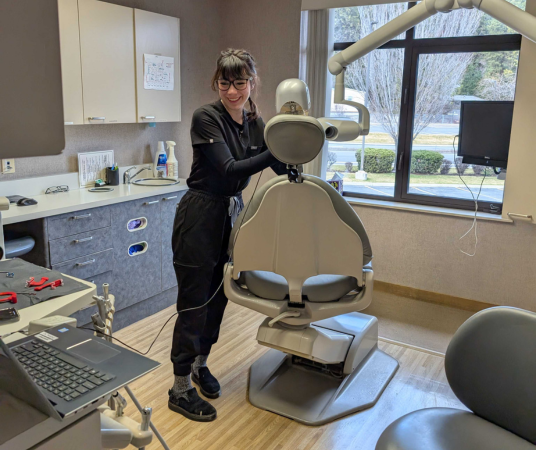
The national median salary for dental assistants is $47,300 per year, according to the Bureau of Labor Statistics — that’s roughly $22.74 per hour for a profession that requires weeks of training, not years of college debt. And depending on where you work, your specialty, and your credentials, that number can go significantly higher.
If you’re weighing whether dental assisting is worth the investment of your time and money, the salary data tells a clear story. Here’s what the numbers look like broken down by experience level and setting — including how training at Grand Rapids Dental Assistant School in Grand Rapids positions you to enter the field ready to work.
Dental Assistant Salary by Experience Level
Not all dental assistants earn the same wage. Experience is the single biggest factor in pay progression:
| Experience Level | Typical Annual Salary | Hourly Equivalent |
|---|---|---|
| Entry-level (0–1 year) | $33,000–$40,000 | $16–$19/hr |
| Mid-level (2–4 years) | $40,000–$48,000 | $19–$23/hr |
| Experienced (5+ years) | $48,000–$58,000 | $23–$28/hr |
| Lead/senior roles | $55,000–$65,000+ | $26–$31+/hr |
The progression is real and consistent. Dental assistants who stay in the field, take on more responsibility, and develop efficiency see meaningful raises — often without needing to go back to school.
What Affects How Much Dental Assistants Make
Practice setting
Practice type
Where you work matters. General dentistry offices are the most common employer, but specialty practices often pay more:
- Oral surgery — procedure complexity and pace
- Orthodontics — consistent demand, good pay, predictable schedule
- Periodontics — specialized skills earn a premium
- Pediatric dentistry — growing field with competitive wages
- Endodontics — technically demanding, higher compensation
Geographic market
Dental assistant salaries vary by region. Metropolitan areas and states with higher costs of living tend to sit at the upper end of the published ranges. Practices in underserved areas sometimes offer more to attract talent.
Office size and patient volume
Larger practices and group dental offices often pay more than solo practitioners due to higher patient volume and more complex operations. Multi-location dental groups may also offer benefits packages that increase total compensation.
How Much Dental Assistants Make Compared to Similar Roles
Dental assisting sits in a strong position when you consider the training-to-salary ratio:
| Career | Training Time | Median Salary |
|---|---|---|
| Dental assistant | 12 weeks – 1 year | $47,300 |
| Medical assistant | 16 weeks – 2 years | $42,000 |
| Pharmacy technician | 6 months – 2 years | $38,350 |
| Phlebotomist | 4 months – 1 year | $40,580 |
| Dental hygienist | 2–3 years (associate’s) | $81,400 |
Dental assisting offers a faster path to a solid income than most comparable healthcare support roles. The only role that sits meaningfully above it — dental hygienist — requires a minimum of an associate’s degree and 2–3 years of school.
The Job Outlook Supports Strong Wages
The BLS projects dental assistant employment to grow 7% through 2033, which means thousands of new positions opening every year on top of existing turnover. This growth is fueled by:
- An aging population that needs more dental care
- Expanded dental insurance coverage bringing more patients into offices
- Increased emphasis on preventive dentistry
- Dental practices expanding hours and adding staff to meet demand
Strong demand means competitive wages. When employers are actively competing for trained dental assistants, pay and benefits improve for everyone in the field.
How to Build Your Career
1. Gain specialty experience
2. Gain specialty experience
After a year or two in general dentistry, consider moving into a specialty practice. Oral surgery, periodontics, and orthodontics all look for dental assistants with the right skills.
3. Develop expanded functions
Some states allow dental assistants with additional training to perform expanded functions — placing temporary crowns, applying sealants, taking final impressions. Those skills widen the range of work you can take on.
4. Build a reputation
Dental assisting is a relationship-driven profession. Dental assistants who are reliable, skilled, and good with patients become highly valued by their offices. That value translates directly into raises, bonuses, and opportunities.
5. Negotiate strategically
Know your worth. Come to salary conversations with data — BLS statistics, local market rates, and your documented experience. Dental offices expect to negotiate, and prepared candidates consistently secure better offers.
Getting to That First Paycheck Faster
A 12-week program at Grand Rapids Dental Assistant School in Grand Rapids is designed to get you earning as quickly as possible. The math works in your favor:
- 12 weeks of training vs. 12–24 months at a community college
- No student loan debt — you keep your full paycheck from day one
- Hands-on training in real dental offices — so you’re not spending months on theory before touching an instrument
The difference between starting your career in 12 weeks versus 12 months isn’t just about time. It’s about 9 months of income — at the median salary, that’s roughly $35,000 in earnings you’d miss by waiting.
Ready to Start Earning?
- See the full program: Program details
- Review tuition and payment options: Tuition
- Talk to our team: Contact us
- Apply today: How to apply
You're 12 weeks from the dental assistant career you deserve.